| Model
|
Parameter |
| Item |
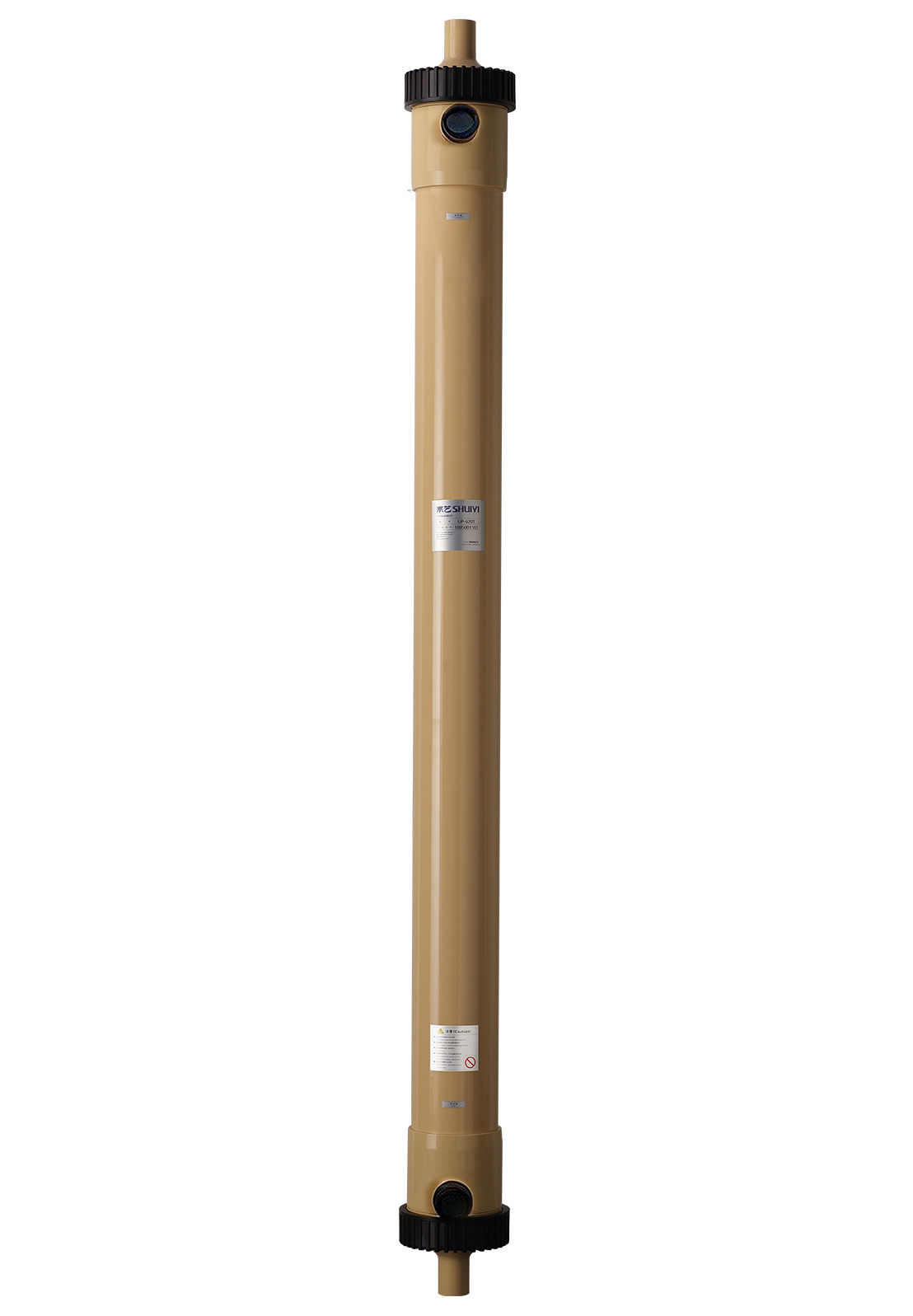
UP-620T |
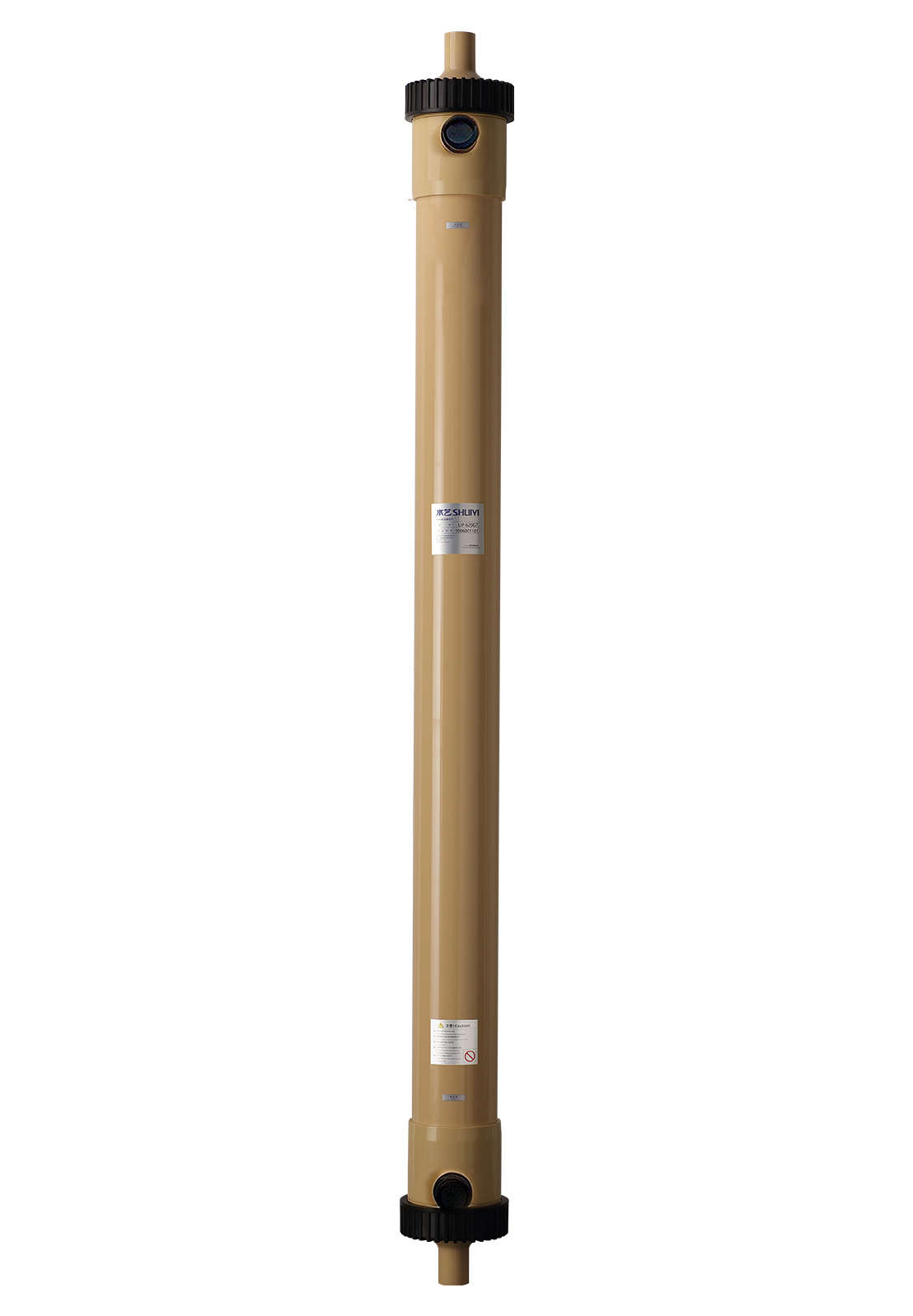
UP-620GT |
UP-860T |
UP-880T |
| Module
parameters |
Effective membrane area |
50 m² |
65 m² |
55 m² |
80 m² |
| Membrane material |
PVDF |
| Membrane Configuration |
Outside-in hollow fiber membrane |
| Nominal pore size ⁽¹⁾ |
0.03 μm |
| Fiber Inner/Outer Diameter |
0.7/1.2mm |
0.6/1.0mm |
0.7/1.2 mm |
0.7/1.2 mm |
| Dimensions |
Φ165×2418 mm |
Φ165×2418 mm |
Φ225×1860 mm |
Φ225×2360 mm |
| Connection size |
DN40/DN50 |
DN40/DN50 |
DN50 |
DN50 |
| Module weight (Wet) |
60 kg |
60 kg |
75 kg |
95 kg |
| Membrane operational parameters |
Maximum inlet turbidity⁽²⁾ |
300 NTU |
| Operational pH range |
1~10 |
| Chemical Cleaning ph Range |
1~14 |
| Temperature |
5~40 ℃ |
| Filtration method |
Dead-end or crossflow filtration |
| Maximum inlet pressure |
≤0.6 MPa |
| Operational flux ⁽³⁾ |
30~200 L/m²·h,25℃ |
| Maximum transmembrane pressure |
≤0.25 MPa |
| Backwash flux |
50~120 L/m²·h |
| Air scour inlet pressure |
≤0.2 MPa |
| Maximum air inletpressure for module |
≤0.25 MPa |
| Air scour flow rate |
5 Nm³/h•unit |
12 Nm³/h•unit |
| Permeate quality⁽⁴⁾ |
Turbidity |
≤0.1 NTU |
| SDI₁₅ |
≤3.0 |
Note:
(1)Test Method Standard: Determination of Pore Size of Porous Membranes — Standard Particle Method (GB/T 38949-2020),Standard Particles: Pollystyrene Microspheres;
(2) The influent condition parameters are values under extreme laboratory testing conditions;
(3) Operational and backwash flux depend on the operation and maintenance of the entire system;
(4) Produced water quality metrics may vary slightly depending on the quality of the influent. The data presented herein have been tested and are reliable, but variability may occur due to different testing methods and operating conditions.
The data presented herein are derived from specific tests and are true and reliable. However, differences may exist between test conditions and actual applicationenvironments, so actual results may vary. It is recommended that users verify and adjust according to their specific operating conditions and assume relevant responsibilities themselves.
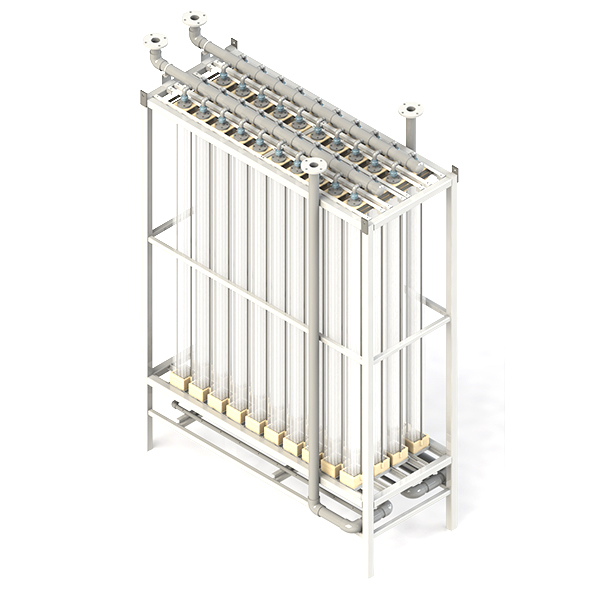
Shuiyi Ultrafil™ TIPS series pressurized UF membrane products feature low equipment investment and compact system footprint. They are suitable for applications demanding high water quality and tight space planning, widely applied in water treatment across industries such as basic chemicals, steel, power generation, textile printing and dyeing, pulp and paper, mining, PCB electroplating, semiconductors, and municipal utilities.


-.jpg)
.jpg)
.jpg)
-1.jpg)