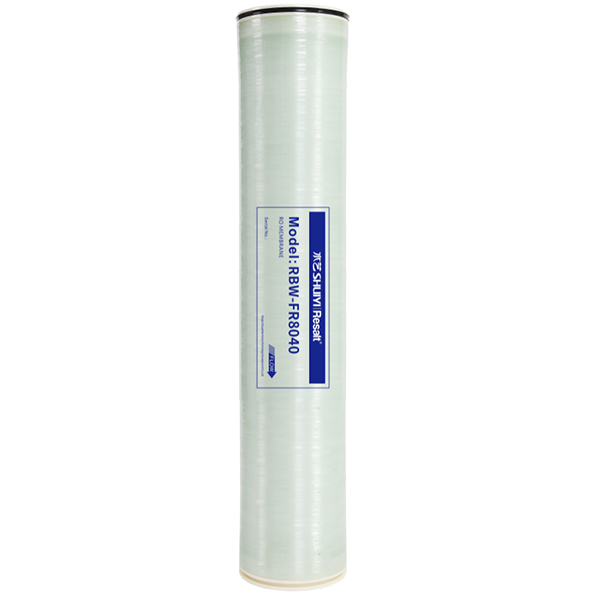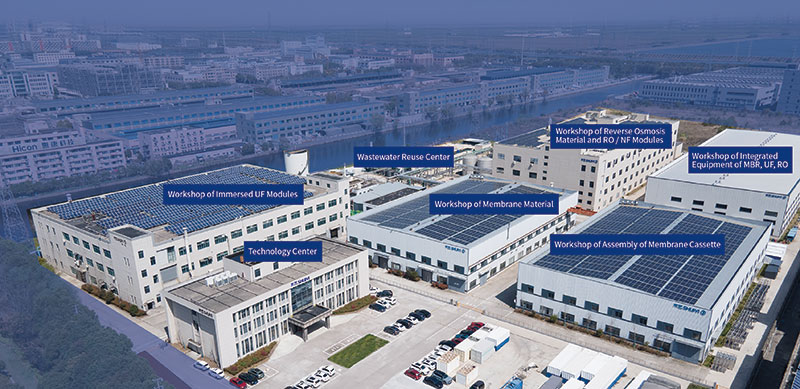

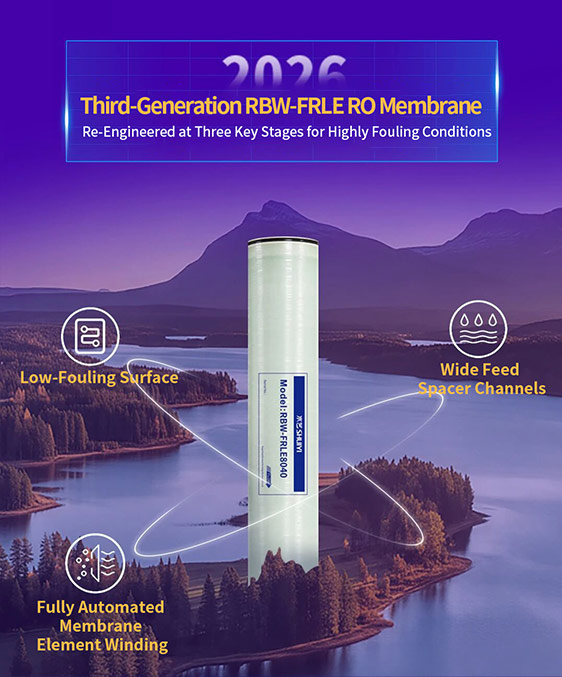
RBW-FRLE 3.0 anti-fouling RO membrane is designed to address the challenges of textile printing and dyeing wastewater reuse, where stable permeate production and long-term operating performance are essential. In these demanding applications, membrane fouling can lead to declining permeate flow, increasingly frequent chemical cleaning and reduced operational efficiency.
It is difficult to maintain long-term stable performance. Permeate flow declines rapidly, chemical cleaning is required more frequently and membrane performance becomes increasingly difficult to recover. These challenges have become common issues in printing and dyeing wastewater reuse systems. After the system operates over time, permeate flow gradually declines, cleaning intervals become increasingly shorter and chemical consumption continues to rise. Eventually, the entire system may experience premature performance degradation, or even require shutdown and retrofit.
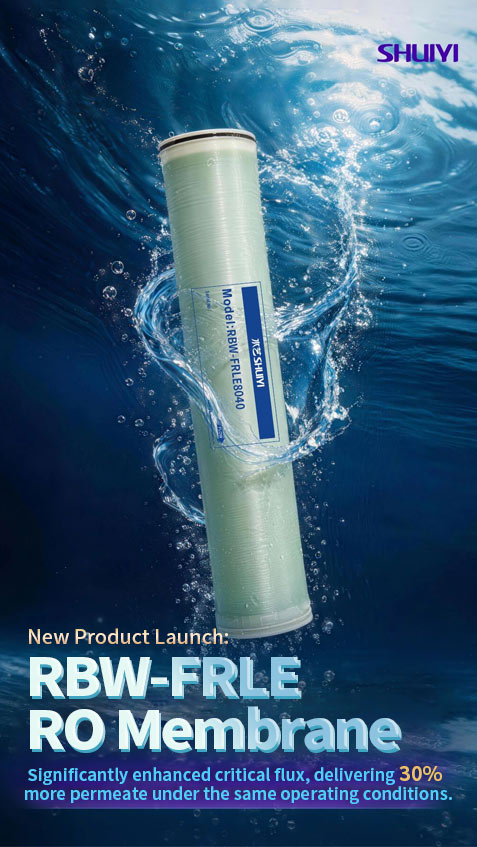
To address these challenges, SHUIYI has launched the third-generation RBW-FRLE anti-fouling RO membrane, specifically engineered for textile printing and dyeing wastewater reuse applications. By tackling membrane surface fouling at its source, RBW-FRLE helps maintain stable permeate production, reduce cleaning frequency and overcome the short membrane service life in wastewater reuse systems.
The core advantage of RBW-FRLE lies in its significantly enhanced critical flux. Under the same operating conditions, it can deliver 30% more permeate than conventional membrane elements while maintaining a more stable operating flux. This means that with the same footprint and feedwater conditions, the system can produce more qualified reclaimed water. Alternatively, for the same permeate production, the operating pressure can be reduced, helping to extend cleaning intervals.
For textile printing and dyeing wastewater reuse projects, the value of RBW-FRLE lies not only in its initial permeate production capacity, but also in its long-term operational stability. It effectively suppresses the accumulation of foulants on the membrane surface, slows the rate of permeate decline and reduces the operating costs and potential membrane performance damage caused by frequent chemical cleaning. This helps wastewater reuse systems achieve sustainable and reliable performance over the long term.
SHUIYI’s third-generation RBW-FRLE anti-fouling RO membrane is specifically engineered for textile printing and dyeing wastewater reuse applications, helping businesses maintain stable permeate production, reduce cleaning frequency and extend system service life.
Jiangsu Textile Wastewater Reuse Project | Comparing Two Generations of RO Membranes Under Identical Operating Conditions
Project Overview:
The project involves the reuse of textile printing and dyeing wastewater. The feedwater has a conductivity of approximately 5,000 μS/cm, high COD levels and significant fluctuations in water quality. Multiple RO membrane systems operate in parallel at the site, and one system was selected for the comparative trial. The design permeate capacity is ≥ 40 m³/h.
Trial Results:
A before-and-after comparison was conducted using the same RO system. Initially, the system operated with FRLE 2.0 RO membranes. Due to the challenging feedwater quality, membrane performance deteriorated, reaching a permeate flow rate of only 30 m³/h — comparable to that of other membrane brands operating on-site. The cleaning intervals were also relatively short. The membrane elements were subsequently replaced with SHUIYI FRLE 3.0 RO membranes. Following the replacement, the permeate flow rate remained stable at over 40 m³/h, while the cleaning interval doubled. The FRLE 3.0 outperformed both competing membrane products at the site and SHUIYI’s previous-generation FRLE 2.0 membranes.
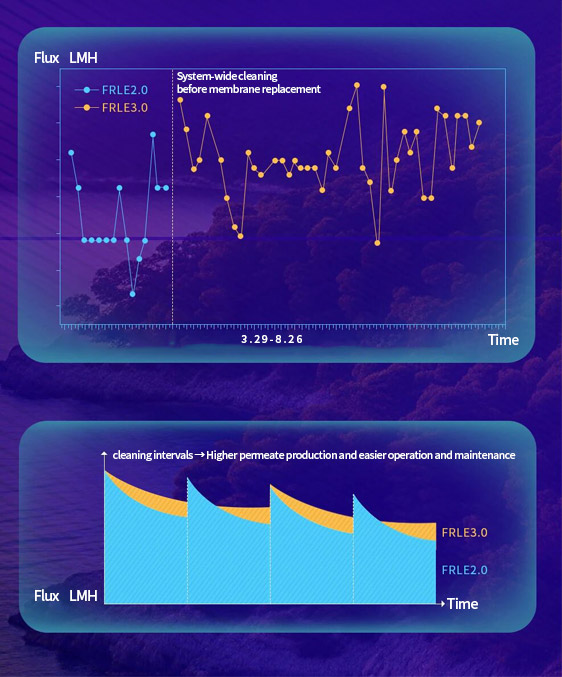
Under these wastewater reuse operating conditions, SHUIYI RBW-FRLE 3.0 anti-fouling RO membrane delivers an approximately 30% improvement in overall performance compared with FRLE 2.0.
(Note: FRLE 2.0 and FRLE 3.0 refer to the second- and third-generation low-pressure antifouling RO membranes in SHUIYI’s RBW-FRLE series, respectively.)
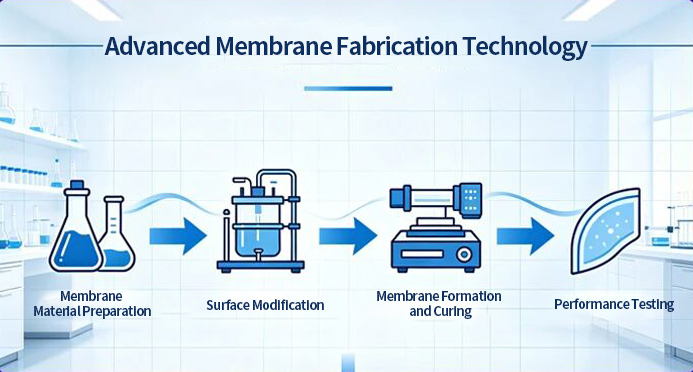
1.Advanced Membrane Chemistry and Fabrication Technology
Antifouling Performance, Higher Critical Flux and Longer Cleaning Intervals
Advanced membrane fabrication technology is adopted to modify the membrane surface for reduced foulant absorption. This enables stable operation at higher permeate fluxes while avoiding the rapid fouling region.
Verified by Project Testing: A 30% increase in stable permeate production and a doubling of chemical cleaning intervals.
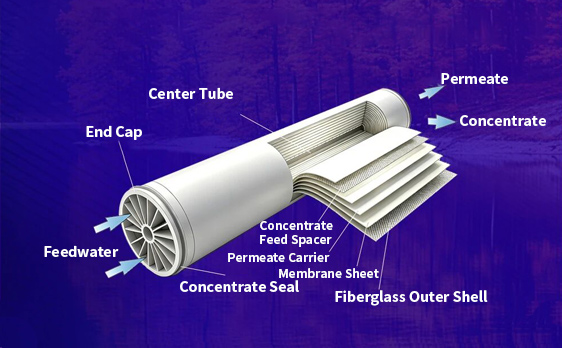
2.Low-Pressure-Drop 34 mil Diamond-Shaped Feed Spacer
Clogging Resistance and Low Operating Pressure Drop
The feed spacer features a widened 34 mil (approximately 0.86 mm) diamond-shaped channel design, allowing foulants to be carried away more easily by the feedwater and reducing accumulation and retention within the membrane envelopes. This effectively lowers the operating pressure drop and reduces system energy consumption, significantly mitigating membrane fouling and clogging when treating wastewater with high suspended solids and high organic content, such as textile printing and dyeing wastewater.
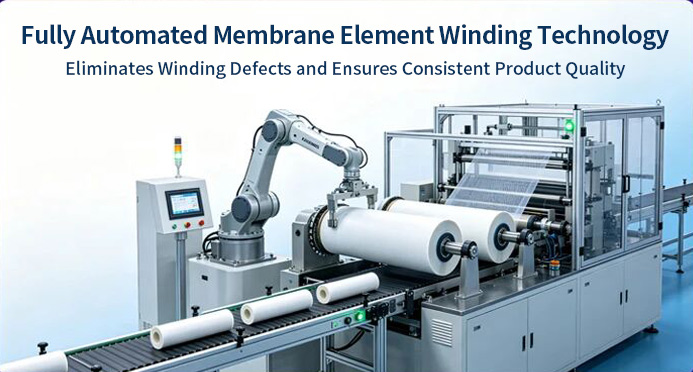
3.Fully Automated Membrane Element Winding Technology
Eliminates Winding Defects and Ensures Consistent Product Quality
Fully automated winding ensures precise and consistent membrane element manufacturing, eliminating defects associated with manual winding, such as wrinkles, misalignment, and uneven adhesive lines. This minimizes performance variation between individual elements and ensures stable system operation. Whether replacing an entire batch of membrane elements or expanding system capacity, it helps deliver consistent and predictable permeate quality.
For textile printing and dyeing wastewater reuse, the value goes beyond reducing water costs. It lies in ensuring long-term system stability and sustainable economic returns. SHUIYI’s third-generation RBW-FRLE RO membrane features three major upgrades designed for highly fouling conditions, delivering higher permeate production, less frequent cleaning, and longer service life.